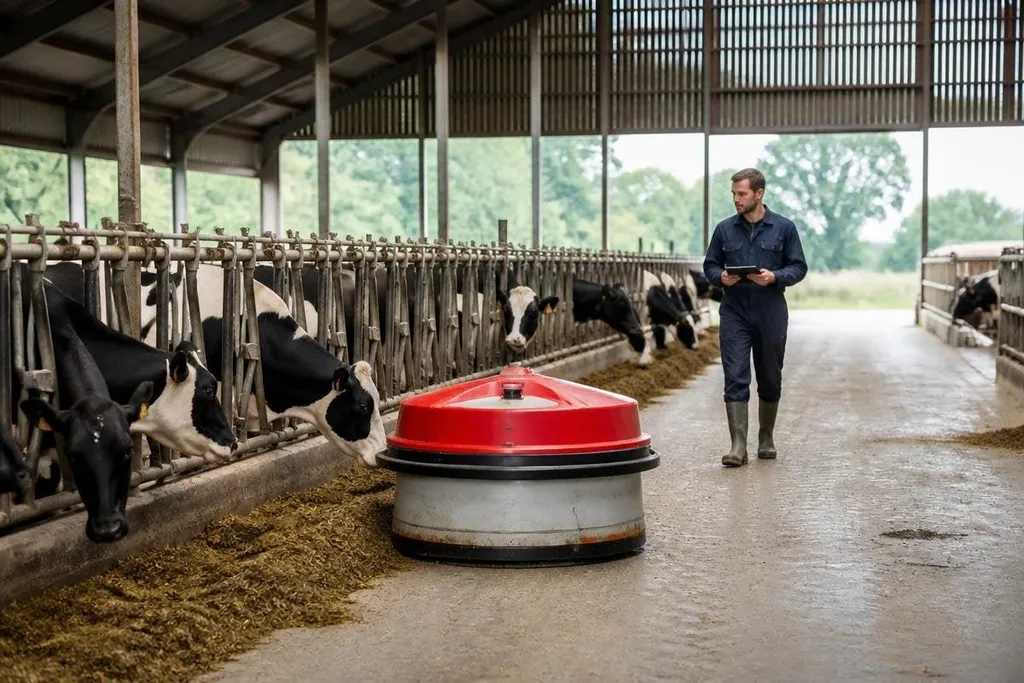
Livestock robots can handle repeat jobs such as feeding, cleaning, milking, and checking animals. They can reduce routine labor on a farm, but their value depends on reliable machines, good data, and staff who can act when something goes wrong.
- Routine jobs can run on a set schedule
- Sensors can flag changes in animal behavior or equipment
- Repairs, animal care, and judgment still need people
Where livestock robots help
A livestock robot works best when the job follows a clear pattern.
Feed delivery, manure scraping, milking, and movement through a barn can all fit that model because the robot can repeat the same route or action many times.
That repeat work can give farm staff more time for animal care and tasks that need judgment. The same machine can also work during hours when fewer people are present, which may help farms manage early-morning, late-night, or weekend duties.
Robots can collect information while they work. Cameras, weight sensors, location systems, and other sensors may help staff spot a change in feeding, movement, milk output, or time spent in one area. A warning does not diagnose an animal, but it can point a person toward a closer check.
A warning only matters if staff can trace it to an animal, time, task, and follow-up check. For a farmer weighing a livestock robot, Robot 24 can place those details beside the machine’s task and test result before the risks on the barn floor.
The risks on the barn floor
These systems can fail in ways that affect animals quickly. A blocked feed route may delay feeding, a dirty sensor may miss a warning, and a charging problem may stop a machine during a busy work period. The farm still needs a manual plan for each case.
Animals also change the setting. They move without following a fixed path, push against equipment, and react to noise or unfamiliar objects. One that works well in a controlled test area may need changes before it can operate safely around a herd.
The physical layout matters too. Floors, gates, ramps, water, dust, waste, and narrow passages can affect wheels, arms, cameras, and wireless signals. Cleaning and inspection become part of the daily work, even when the robot handles the original task.
Data brings another concern. A system that records animal activity or farm operations may store useful information, but the farm needs clear rules for access, retention, and sharing. A low purchase price can look different after software fees, service visits, replacement parts, and staff training enter the budget.
What the robot cannot decide
A sensor can show that an animal moved less than usual. It cannot replace a trained person deciding whether the cause is illness, injury, heat, feed, or a change in the animal’s surroundings. That decision still needs observation and care.
The same limit applies to repairs. Staff need to know how to stop the machine, isolate its power, reach an animal safely, and return the system to work. Training is part of the purchase, not an extra task after installation.
The strongest case for a livestock robot comes from a narrow job with a clear result. A farm should ask what work will change, who will respond to faults, and how the system will be checked when sensors produce a warning.
A practical buying check
Use these questions before choosing a system:
- Name the job: Can the robot repeat the task in the farm’s actual layout?
- Check the fallback: Who handles feeding, cleaning, or monitoring when it stops?
- Price the full setup: Include installation, software, service, parts, power, and training.
- Test animal contact: Check how the robot behaves when animals block or approach it.
- Set data rules: Decide who can view records and how long the system keeps them.
- Define success: Choose a measure such as fewer manual trips, faster checks, or fewer missed tasks.
I'd skip a system that has no clear fault plan, even if its main task looks useful. The system earns its place when it handles repeat work safely, gives staff useful information, and leaves a person ready to take over when the machine cannot.